This is a map of the locations visited by travellers to the Sea of Azov in their search for evidence of the Odin migration theory.
General Info
The Odin Migration Theory was initially proposed by the medieval Icelandic historian Snorri Sturluson. In his account of Norway’s kings, Heimskringla, Sturluson argued that Odin had been a real person who had migrated North from a region in Asia near the river Tanais, now called the Don. In the eighteenth century, this idea was popularised in Britain through the publication of Northern Antiquities, the antiquary Thomas Percy’s translation of the Swiss historian Paul Henri Mallet’s two volumes on ancient Nordic history. The Odin Migration Theory captivated the eighteenth-century antiquarian imagination as it constituted a powerful narrative for constructions of ethnic and cultural heritages in the period. The theory proved popular still in the following centuries. Scandinavian travellers like Fridtjof Nansen and Thor Heyerdahl continued to be fascinated by a possible link between the North and ancient civilisations, and the theory lives on in modern interests in Hyperdiffusionism.
Edward Daniel Clarke
Edward Daniel Clarke
Edward Daniel Clarke (1769-1822) was an English traveller, collector, mineralogist, and clergyman. He is best known for his extensive travel narrative, Travels in Various Countries of Europe, Asia, and Africa. This account details a journey that he begun in 1799 and ended in 1802, where he travelled up to Scandinavia, through Russia, Turkey, the Levant region, and, finally, to Greece.
During his travels, Clarke acquired, legally and otherwise, many artefacts and antiquities from local communities, particularly in Egypt and Greece. After his return to England and the donation of these antiquities to various institutions and libraries, he was made Professor of mineralogy at Cambridge.

Travels in Various Countries
Clarke's travel narrative was published in an array of volumes, sections, and editions between 1810 to 1824.
This map features material from volumes one and two, which accounts for his travels between Russia and the Black Sea, and volume eleven, which concerns the travels he made around Uppsala, Sweden.
Clarke’s Travels was widely read, and has been argued to have contributed to an increase in travel to the North in the early nineteenth century.
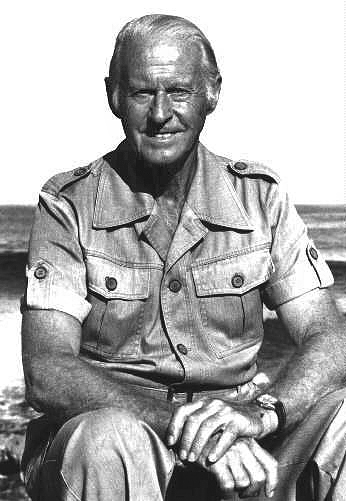
Thor Heyerdahl
Thor Heyerdahl
Thor Heyerdahl (1914–2002) was a Norwegian explorer and author, most famous for the Kon-Tiki expedition. In 1947, he sailed the Pacific Ocean in a self-made balsawood raft from South America to the Polynesian islands. The expedition was meant to demonstrate that ancient people could have had contact with each other and made long journeys with their current technology. Heyerdahl’s adventures and theories were largely motivated by his belief in diffusionism, the argument that when different societies share similar cultural elements, these commonalities are often the result of cultural exchanges rather than coincidence or parallel development.
Heyerdahl would later lead three other expeditions with rafts, namely Ra I, Ra II and Tigris, similarly motivated by his theory about contact between ancient people and cultural diffusion. Heyerdahl published several books based on his expeditions.
Jakten på Odin
Heyerdahl's last book before his death in 2002. It is co-authored with Swedish artist Per Lillieström, who had joined Heyerdahl on some of his visits to the area around the Sea of Azov. These visits, or expeditions, were not only to prove that Scandinavian origins could be found in the area, but that the Odin migration theory, as told by Snorri Sturluson, was based on historical facts.
Heyerdahl tells of his travels and participation in archaeological digs in 1982, 1994, 1999 and 2001, all to prove his theory that Odin had been a historical person, a powerful chief, who brought his people to the North.